Loft InsulationHeat Leaves Through the Roof First
Warm air rises. In a house with a cold loft, the ceiling is the last thing between your heating and the sky, and if the insulation above it is thin, settled or missing in places, that is where a large share of your heating goes.
Loft insulation is the cheapest and least disruptive fix for it. Nothing is dug up, no walls come down, and in most houses it is a single visit. That is why it is almost always the first thing we recommend looking at.
What it is not is a product you buy by the roll and forget. The depth matters, the ventilation matters, and what is already up there matters. All three are things we check before quoting.
Get a Free Quote
What We Install
We work in mineral wool, the material that most UK lofts are insulated with. It is well understood, widely available, non-combustible, and when it is laid properly it does its job for decades without attention.
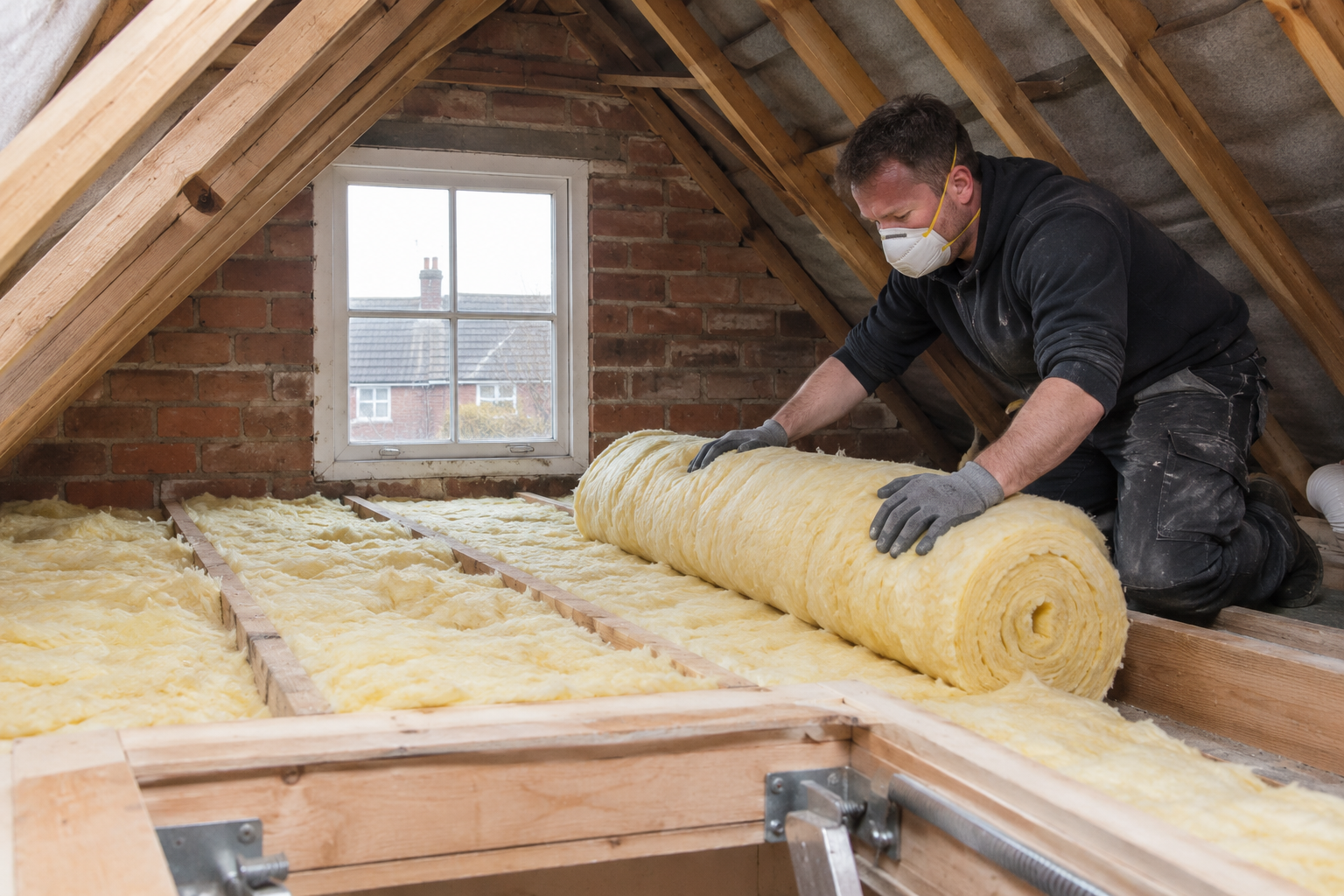
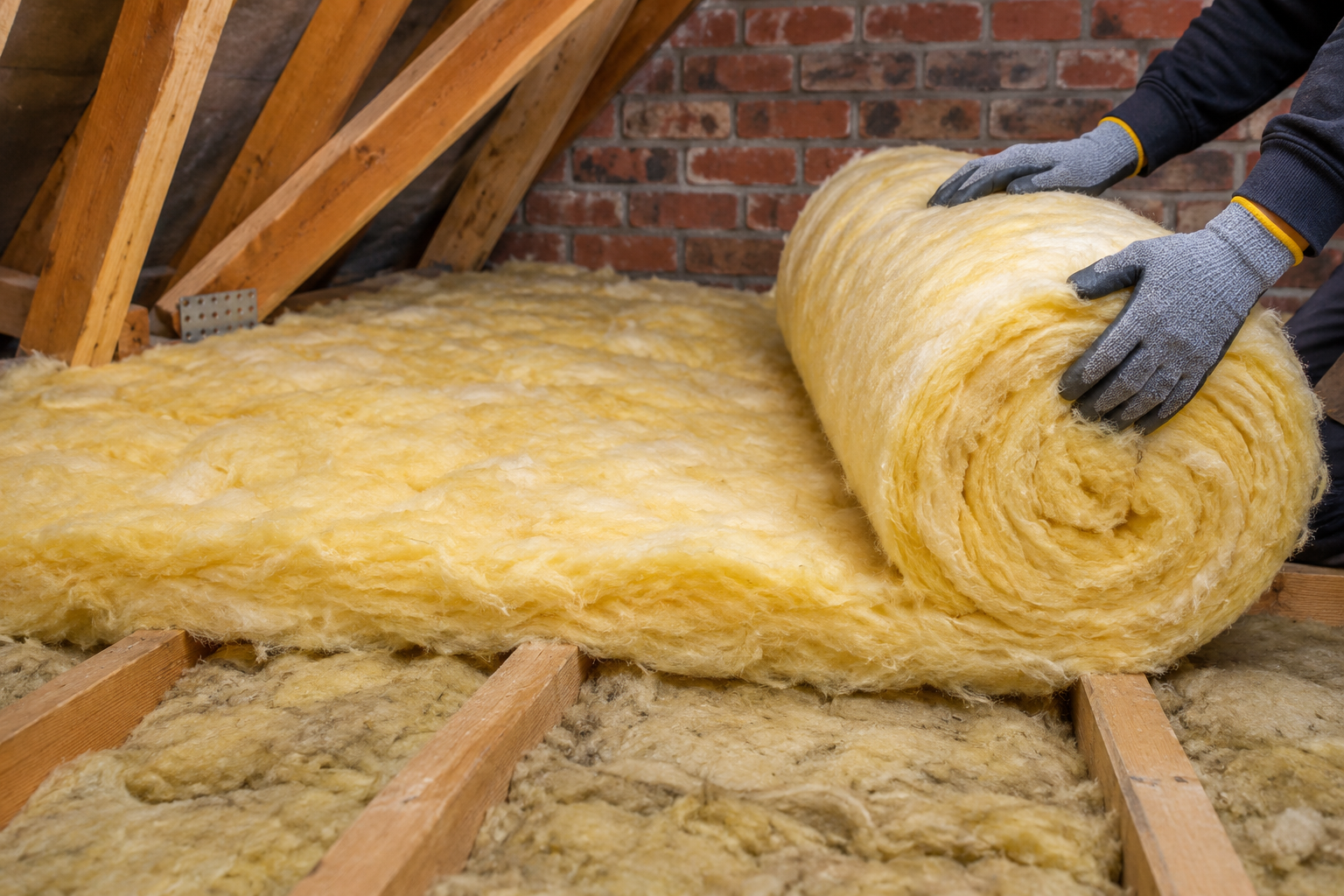
A standard cold-loft installation has two parts. The first layer goes between the ceiling joists, filling the gaps. The second layer goes across the top of them at right angles, covering the joists themselves so they do not act as cold bridges through the insulation. Current guidance for a cold loft is a total of around 270mm; a loft insulated in the 1980s often has a third of that.
🧶
New insulation
For a loft with nothing in it, or nothing worth keeping. Both layers laid from scratch, eaves kept clear, hatch dealt with.
➕
Top-ups
For a loft with a thin or settled layer already down. We add the cross layer to bring it up to current depth, which is usually quicker and cheaper than starting again.
🚿
Pipes and tanks
Pipework and any cold-water tank above the insulation are colder once the loft is insulated. We lag pipes and insulate tank sides and lid where it is needed.
Ventilation is part of the job, not an extra
Insulating a loft makes it colder up there. That is the point: the heat stays below. But colder air holds less moisture, and moisture escaping from the house below has to go somewhere. If the eaves are blocked, if a bathroom fan vents into the loft rather than outside, or if the hatch leaks warm air all day, you get condensation, and eventually damp timber.
So the ventilation path at the eaves is something we look at on every job, and we fit baffles to keep it open where the insulation would otherwise push into it. If we find a fan venting into the loft, or anything else that will cause trouble once the insulation goes down, we will tell you, whether or not it is work we are quoting for.
What Happens on the Day
The route from the front door to the hatch is protected first. Material goes up in bags, which keeps the mess in the loft rather than on your stairs. If there is old insulation to pull back or anything to move, that happens before anything new goes down.
The first layer goes between the joists, pushed in but not compressed, and stopped short of the eaves where the baffles are. The second layer goes across the top. Around the hatch we leave things in a state you can live with: nothing loose to fall through when you open it.
At the end we clear up, take the packaging away, and show you the finished loft before we go.
Who It Suits
- Houses with no loft insulation at all, which is rarer than it was but still happens
- Houses with a thin layer put down decades ago and never touched since
- Houses where the insulation has settled, been walked on, or been pushed aside to get at something
- Lofts where insulation has been pulled up around the hatch and never put back
- Landlords and property managers improving a property between tenancies
If your loft is boarded over already, insulation underneath may have been squashed flat by the boards. That is a common and easily missed problem, and it is one of the things we look for.
What We Will Tell You Honestly
There are a few things we would rather say at the quoting stage than afterwards.
- If your insulation is already at a sensible depth and in good condition, we will say so, and you will not get a quote for work you do not need.
- We do not quote energy bill savings. How much you save depends on how you heat the house, how warm you keep it, what the rest of the house is like and what energy costs that year. Anyone giving you a figure for your house without knowing those things is guessing.
- If there is damp, a roof leak, or an electrical problem in the loft, insulation is not the first job. We will point it out and suggest you deal with that first.
Will new insulation make my house warmer straight away?+
You will usually notice upstairs rooms holding their heat longer, particularly overnight. The change is in how long warmth stays rather than how quickly the house heats up.
Can I put insulation over the old stuff?+
Usually yes, if the old layer is dry, clean and undisturbed. A cross layer over the top is exactly how a top-up works. If the old material is wet, contaminated or full of debris, it needs to come out first.
Do you insulate the hatch?+
The hatch is a hole in your insulation, so it is worth dealing with. We can insulate and draught-seal the one you have, or fit a new insulated hatch. Either way it gets mentioned in the quotation.
What about downlighters in the ceiling below?+
Recessed lights need either a fire-rated fitting with the correct clearance or a cover designed for the purpose. We do not bury them in insulation and we do not pretend it is fine.
Get a Free Quote for Loft Insulation