Loft BoardingSomewhere to Put Things, Safely
Most lofts are used for storage whether or not they were ever designed for it. People balance on joists, put a plank across, and hope. Boarding turns that into a proper floor: level, fixed down, and safe to stand on.
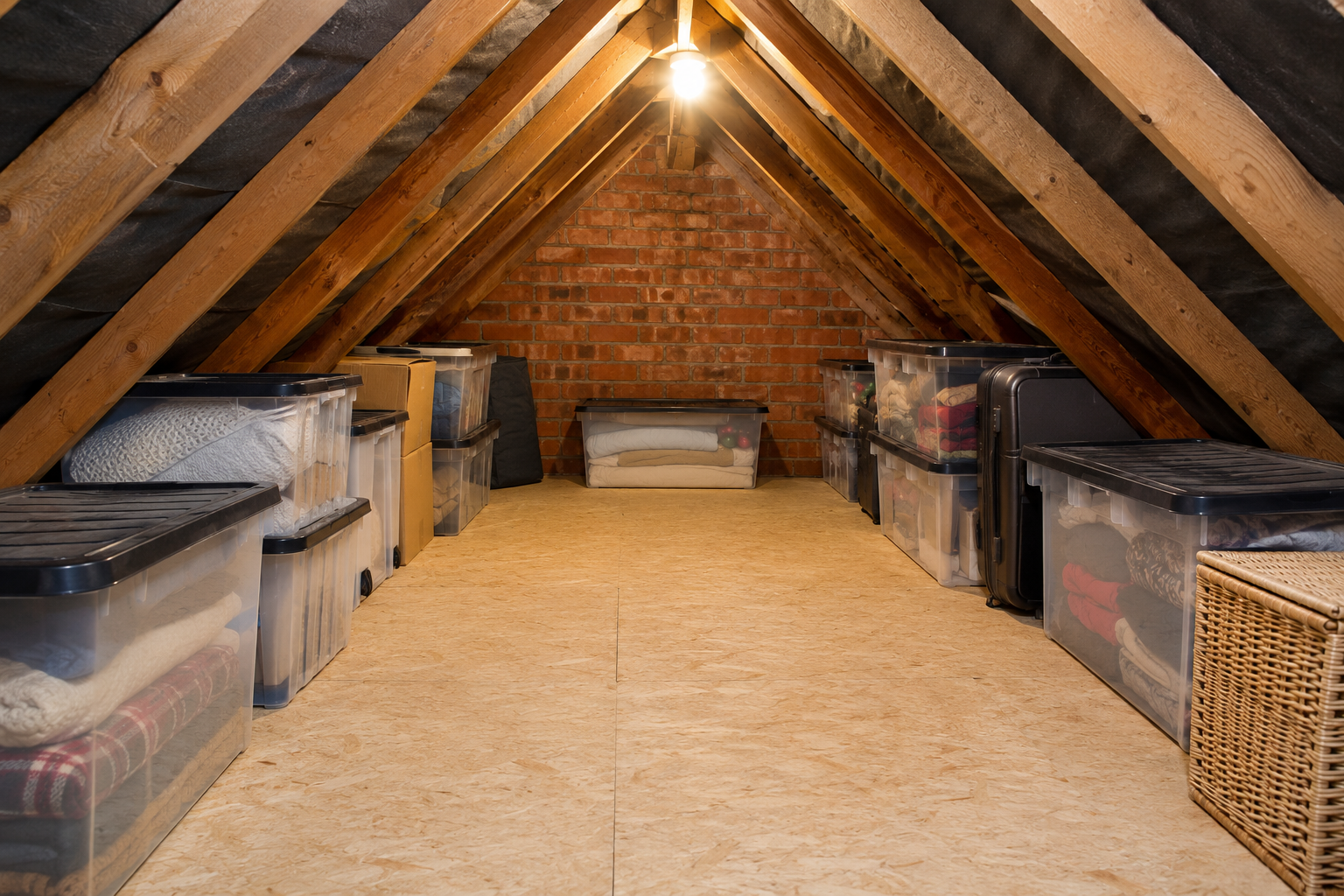
What boarding is for is light storage. Suitcases, decorations, paperwork, baby equipment, the things you want out of the way but not gone. What it is not for is heavy loads, and it is not a loft conversion.
Get a Free Quote
Two Questions Before Anything Else
Will the structure take it? Ceiling joists were sized to hold a ceiling up. In many houses, particularly older terraces, they are shallow and widely spaced. Adding a floor and a load to them is not automatically safe. We measure the joist depth and the spacing and look at how far they span before we quote. If the answer is no, we will say so, and we will explain what could be done instead.
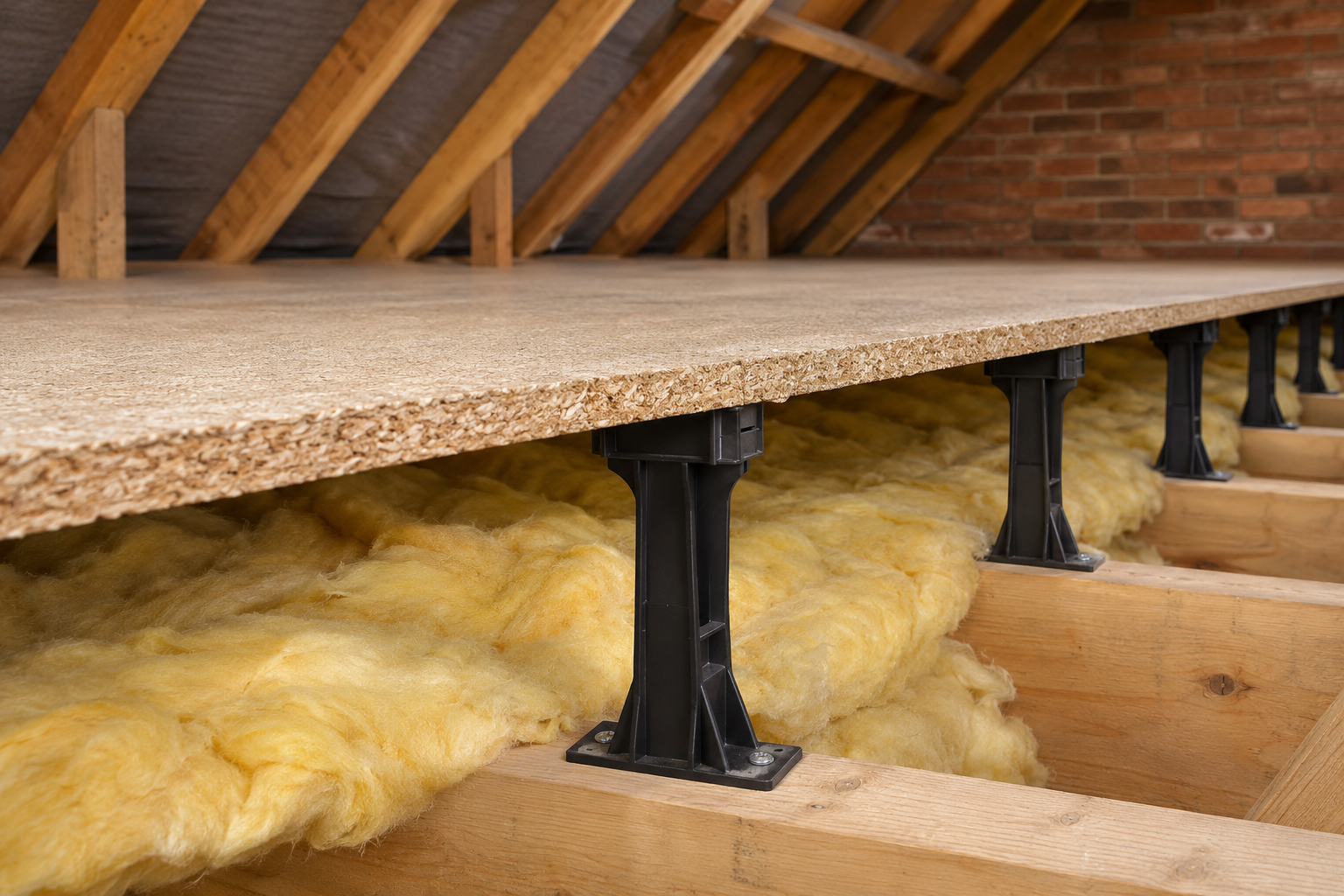
What happens to the insulation? Boards laid straight onto the joists squash whatever is underneath, and squashed insulation does not work. If your loft has insulation at anything like a sensible depth, boarding it flat undoes a good part of that. This is the single most common mistake we see in already-boarded lofts.
The answer to the second question is usually raised loft boarding, which lifts the deck clear. Standard boarding at joist level is the right choice where the existing insulation is genuinely shallow, where only a walkway is wanted, or where the loft is being insulated to a different design.
What We Fit
- Storage platforms — a boarded area near the hatch, sized to what you actually use, rather than the whole loft footprint
- Walkways — a run of boards from the hatch to a tank, a valve or the far end, so there is a safe route without boarding everything
- Full boarding — where the structure allows it and the use justifies it
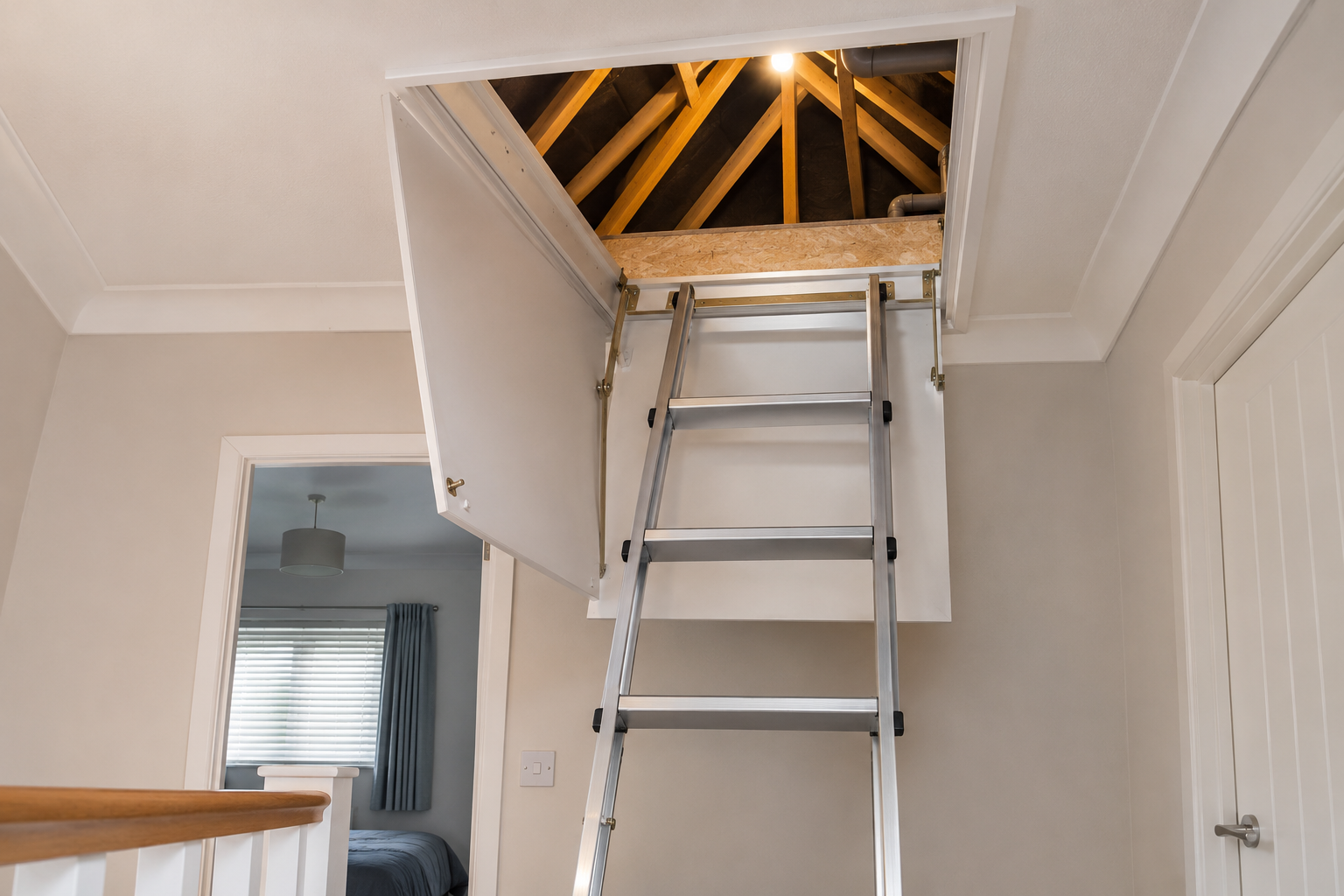
We use tongue-and-groove loft panels, which are easier to handle through a hatch than full sheets and lock together once down. Boards are fixed, not loose-laid. Edges near the hatch are finished so nothing catches.
How Much to Board
The honest answer is usually less than people first ask for. Boarding the whole loft costs more, adds more weight, and in most houses the far corners never get used because they are too low to reach comfortably.
We will normally suggest boarding the area you can stand up in and reach easily, and leaving the rest as insulation. If you later want more, it can be extended.
Tell us what you plan to store and roughly how much of it. That, more than the floor area, is what decides the sensible answer.
What boarding is not
A boarded loft is not a room, and we will not describe it as one. It has no fire separation, no proper stairs, no Building Regulations approval and no insulation designed for a habitable space. Storing light things in it is fine. Sleeping in it, working in it or letting children play in it is not.
If a habitable room is what you are after, what you want is a loft conversion, which is structural work carried out by a conversion specialist with Building Regulations approval. We are happy to say so rather than sell you something that looks similar from the photographs.
How much weight can a boarded loft take?+
That depends entirely on the joists, which is why we measure them. The quotation will say what the deck we are fitting is intended for. In general: light, dry, occasional items spread out rather than stacked.
Can you board round the water tank?+
Yes, and we usually leave proper access to it rather than boxing it in. Valves and ballcocks need to be reachable.
Will I need to clear the loft first?+
It helps a great deal. If you cannot, say so on the quote form; moving and replacing what is up there is something we can include, or you may want a loft clearance first.
Can you board a loft that already has insulation?+
Yes, but not by laying boards on top of it. Either the boarding goes on battens above the insulation, or the insulation is redesigned around the boarding. We will talk you through which applies to your loft.
Get a Free Quote for Loft Boarding